

Remote Panhandle fishery J.B. Thomas quietly cranking out the big ones like no other

Another little West Texas lake is quietly gaining the attention of big bass junkies across the state and beyond.
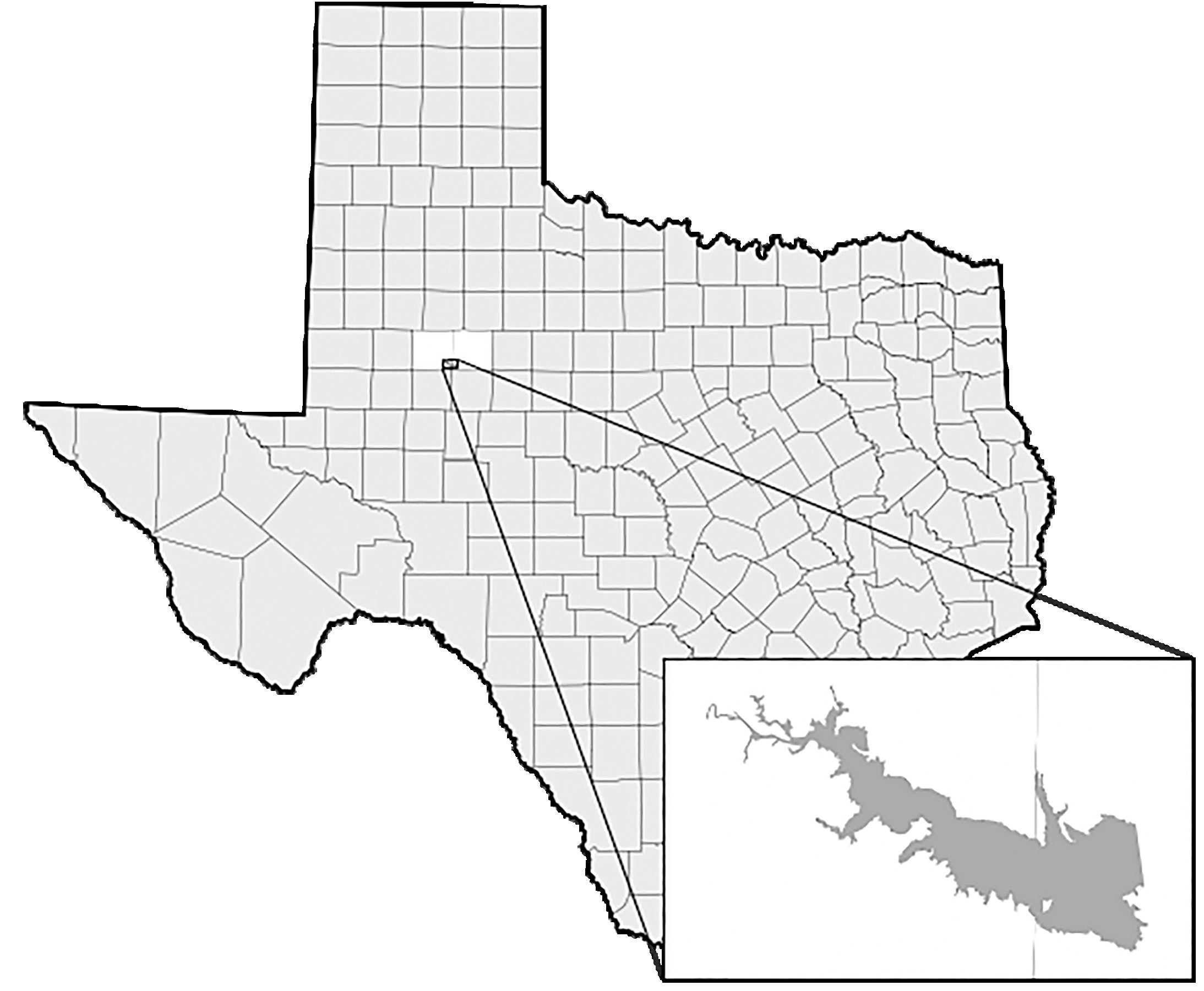
J.B. Thomas is the name. Fishing guide Christian Gladfelter thinks “Slaunchville'' might be a more befitting title for the tiny Panhandle Reservoir 12 miles southwest of Snyder.
“Slaunch” is a term coined several years ago by Bassmaster commentator, Mark Zona. It’s a catchy expression popularized in Zona’s colorful descriptions of thick shouldered bass with serious weight problems.
The analogy found a permanent spot in Gladfelter’s vocabulary. He calls his business slaunchedguideservice. com.
“It’s the land of the giants out here — a double- digit factory, for sure,” said Gladfelter. “I’m glad I found it.”
Gladfelter is a 28-yearold angler from Albuquerque, N.M. Admittedly, he discovered the remote fishery out of blind luck.
Like many anglers, Gladfelter was originally lured to another West Texas fishery — O.H. Ivie — after the lake caught fire with big bass during the big freeze of February 2021. ‘Ivie has since been at the epicenter of an endless stream of fairy tale fishing reports built around armies of giant fish to shock the imagination.
Gladfelter said he grew tired of the ‘Ivie crowds lured there because of the great fishing. He made his first trip to J.B. Thomas in May 2023. It’s been happy slaunching ever since.
“I’ll never forget it,” Gladfelter recalled. “I was on my way back home from O.H. Ivie. Lakes Alan Henry and J.B Thomas were right there in a line. I decided to stop off at J.B. Thomas to check it out.”
It was hardly love at first sight. What he found looked more like a gar hole than a gem of a bass lake.
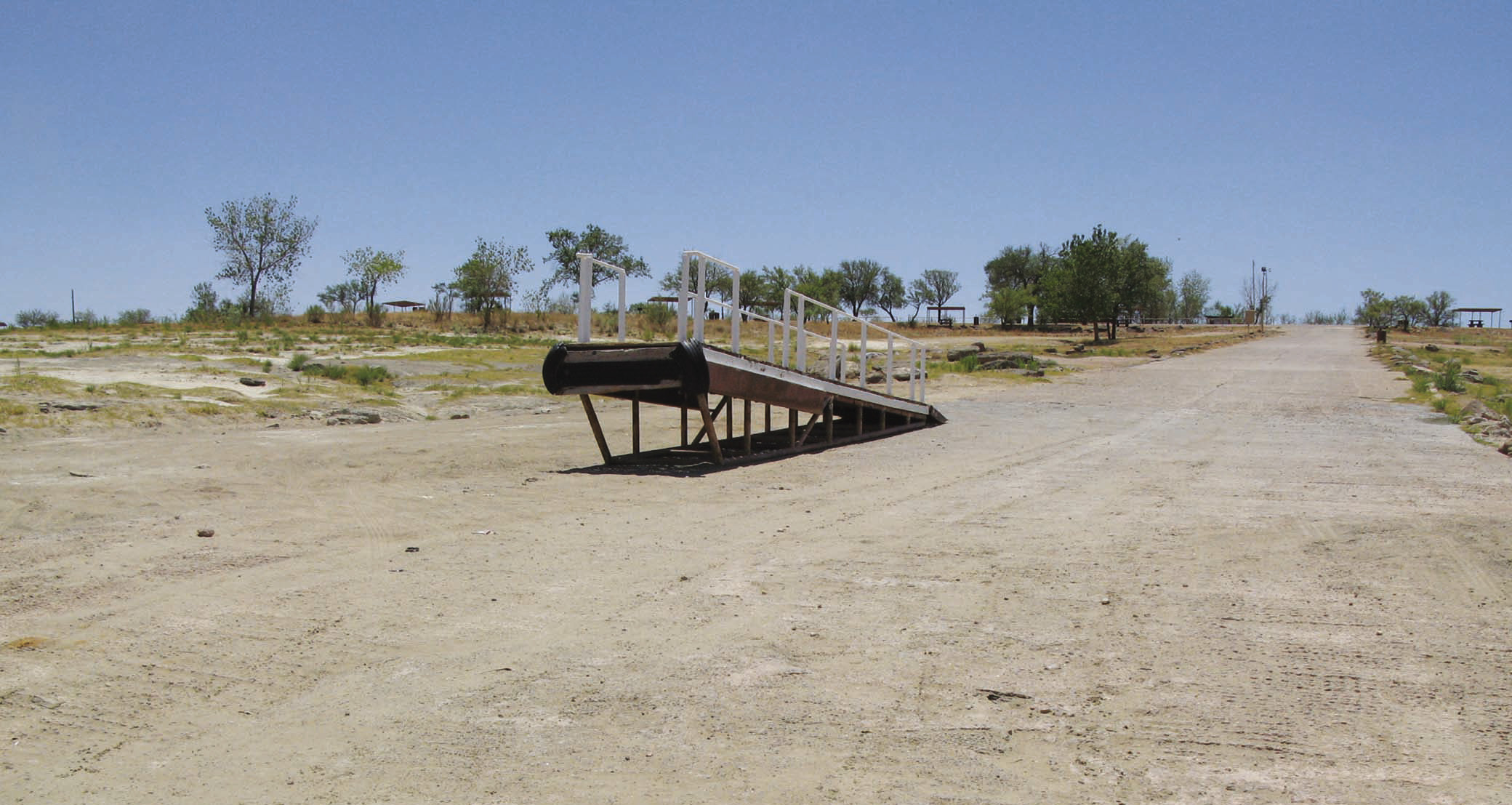
“The water was like chocolate milk and the landscape looked like one of those commercials where you see tumbleweeds across a dusty road,” he recalled. “There are no facilities, no lakeside lodging and no gas. It didn’t look like much, but boy was I wrong. Stopping there was the best decision I ever made.”
Gladfelter’s first afternoon on the water was extraordinary. He and a friend found an offshore hump swarming with big bass eager to bite.
The guide said they reeled in more than two dozen fish over eight pounds before dark. All were caught using forward-facing sonar to make precise casts to groups of fish that acted as if they had never seen an artificial lure before.
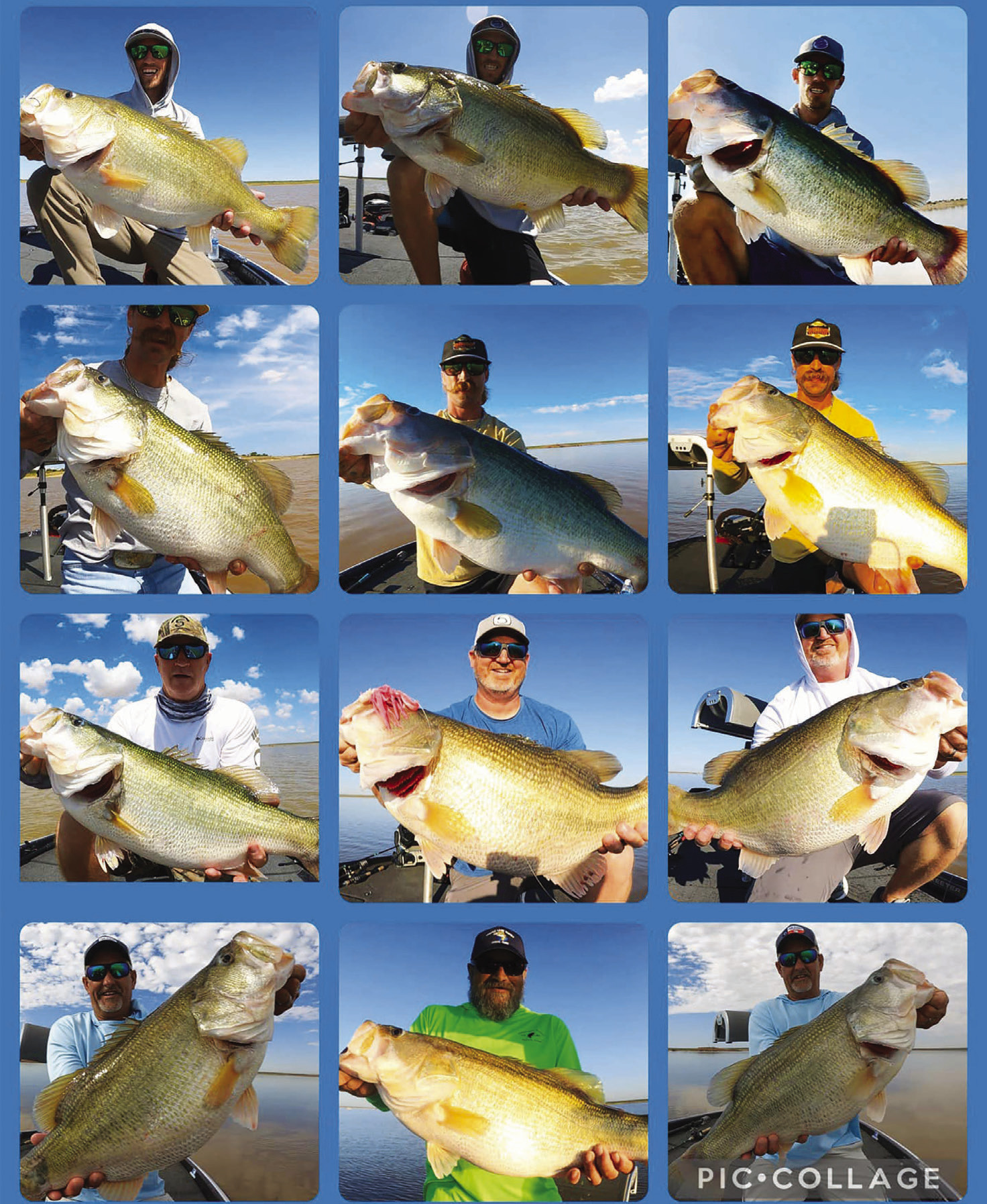
It’s hard to imagine the fishing getting any better than it did that day, but it has. Gladfelter claims more than 250 bass topping 10 pounds — 95 percent of them personal bests — have been caught and released by his clients over the last 14 months.
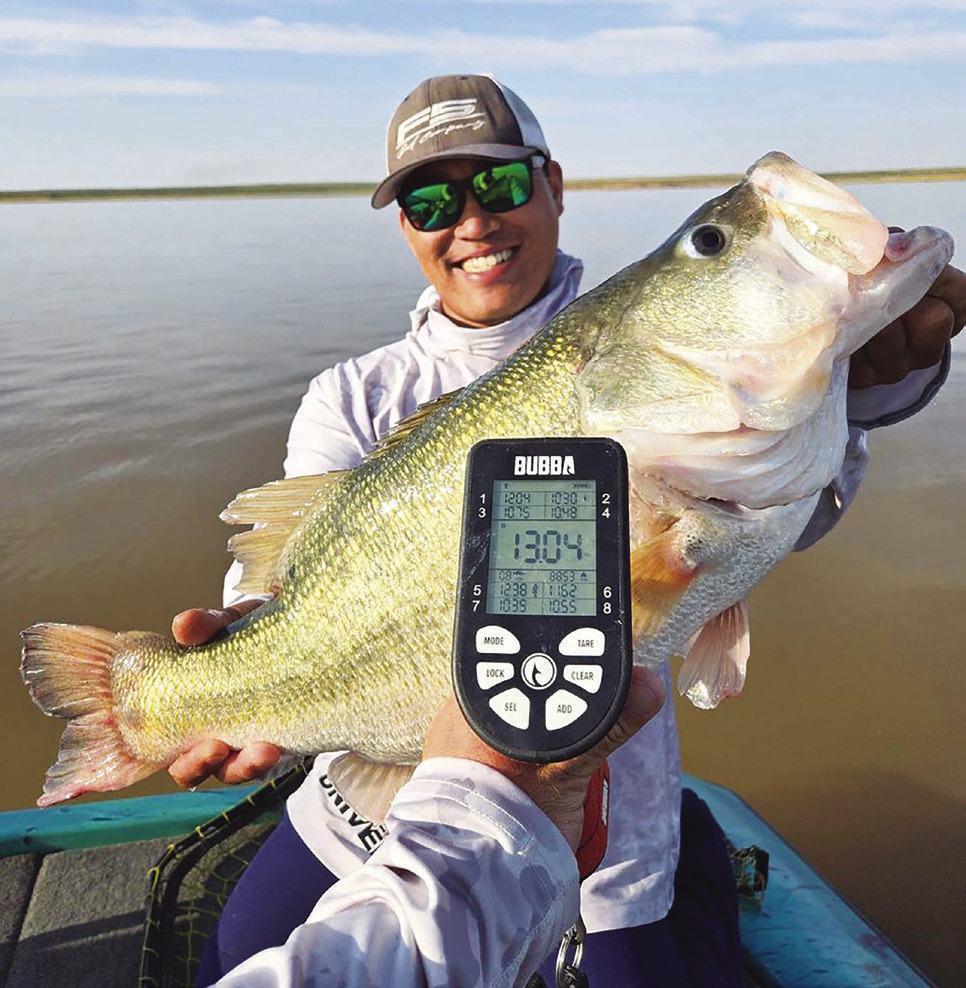
Among them are a 13.79 pound official lake record caught in January 2024 by Lawrence Lee of Tolar. Lee has landed two other 13 pounders while fishing with Gladfelter, including a 13.75 in June and 13.04 pounder caught on July 19 in sweltering West Texas heat. He has entered 11 other ShareLunkers ranging eight to 10.04 pounds since June.
“Lawrence is a fishing machine,” Gladfelter said. “Casts and retrieves have to be precise here and he has it down perfectly. The more conventional ways of bass fishing just don’t work here. Most people don’t have very good luck.”
Gladfelter says he owes a bundle of his success to a swim jig he designed specifically for targeting ‘Thomas dirty water. He calls it the “Space Invader. ” He says the bait imitates the crappie and gizzard shad that comprise the bulk of the bass’ diet. He uses bright colors to help the fish see the bait in muddy water.
Brandon Burks of Stephenville is another forward- facing sonar expert who found big bass nirvana at the remote West Texas fishery. Burks made his first to J.B. Thomas in July 2023 and boated multiple fish over eight pounds.
He has logged a library storybook days since. His best fishing day ever was in January 2024. Burks claims he and a client boated five bass weighing upwards of 55 pounds.
He says his boat accounted for boating three bass over 13 pounds this month and topped 50 pounds on his heaviest five fish on three consecutive days. All are documented by photos and cast to catch videos on his Facebook page, burksfishing. Many were caught using a specialty bait he designed. It’s called the FFS Sniper Jig.
“This is an incredible place — world class,” Burks said. “But it’s remote. There aren’t any places to stay besides Snyder, there is one boat ramp and it’s a long way from any big towns. It’s not easy fishing, either. Ten boats is a crowded day out here and most guys don’t catch much because they just don’t fish it right. That’s what keeps everyone away.”
BERTH OF A TROPHY FISHERY So, how does a world class fishery like J.B. Thomas went undiscovered until now?
That’s a success story in itself, one that is built around a rich history of blistering drought dating back more than six decades. The 7,200-acre Permian Basin water supply hasn’t been full since the early 1960s. In 2012-13, the lake shrunk to less than 200 surface acres and was on the verge of completely drying up. Oxygen levels in the remaining pool dropped so low that it spurred a significant fish kill that wiped out most piscatorial life.
Texas Parks and Wildlife Department fisheries biologist John Clayton of Canyon was in the fourth year of his career at the time. To hear Clayton tell it, J.B. Thomas was a dismal sight.
“It looked more like a plowed up pasture than a lake the first time I saw it,” he recalled. “You could almost walk across it in places. I thought, oh, well, it’ll come back someday.”
Ugly as it was, Clayton saw promise on the horizon. Decades of drought and sporadic rainfall had spurred the growth of native grasses, fields of brush, cottonwoods and other hardy terrestrial plants along parched shorelines, vast flats and channel edges. The stage was set for a rebirth. All it needed was a whole bunch of water to put things in motion.
A MEGA FLOOD
The moisture came in September 2014. That's when a powerful Pacific Hurricane Odile slammed Cabo San Lucas along the Mexican Baja. Remnants from the storm drifted northeast, bringing drenching rains to parts of the Texas Panhandle that fell on the J.B. Thomas watershed. The lake level jumped 33 feet in a week, eventually rising more than 40 feet on the heels of subsequent rain events in early 2015.
J.B. Thomas jumped from fewer than 200 acres in size to more than 6,000 acres within a week’s time, flooding much of the lush terrestrial growth that had sprouted during the extended drought. Clayton said this pumped in an influx of nutrients and created a jungle of underwater cover for young fish to hide in, thus setting the stage for increased survival and recruitment of young fish.
Another benefit occurred as the newly-flooded plants began to die and decompose. This resulted in another big shot of nutrients, benefitting plankton and other microscopic plants and animals that are the foundation of the food chain. The nutrients also act as a liquid fertilizer for the lake's bottom.
J.B. Thomas was essentially like a brand new lake again. Problem was, there weren't many fish finning around there to take advantage of it.
TPWD seized the opportunity to help revitalize the fishery by stocking nearly 79,000 Florida bass fingerlings in 2015, followed by additional stockings through 2024. Gizzard shad, crappie and bluegill populations have since spiked, and biologists say the bass population is thriving with a bounty of forage to keep them fat and sassy.
“There were probably a few bass left in there from previous bass stockings, but we saw really high survival rates with those 2015-16 stockings —there just weren’t many predators left in the lake to eat them,” Clayton said. “The Florida bass are the dominant species. A lot of those fish are 9-10 years old now.”
Clayton added that the lake’s gizzard shad population is booming, as well.
“Our electrofishing surveys have shown us that,” he said. “If we can collect 300400 shad per hour, that’s good for our West Texas lakes. We collected more than 1,000 shards per hour at J.B. Thomas last fall.”
HOW LONG WILL IT LAST?
How long the fairy tale fishing will last is anybody’s guess.
Despite a mild spike in 2022, the water level has been in a downward slide since the 2015 flood. It’s currently about 3,000 acres in size or 18.4% full, down from 77% full nine years ago.
'I wish I had a crystal that could tell me what’s ahead for that lake,” Clayton said. “It would be great if it could catch some more water and hold at decent level, but if the water level continues to drop like history tells us it will, the fishing will eventually fizzle out.”
Only time will tell what the near future holds for J.B. Thomas. In the meantime, somebody needs to update the lake’s home page on TPWDs’ website.
The bass fishing there is a far cry from “fair” as listed. It may be the best lake in the country to get “slaunched” by a double- digit lunker right now.
——————————
Matt Williams is a freelance writer based in Nacogdoches. He can be reached by email, mattwillwrite4u@yahoo.com.