

From Staff and MCI Reports
Colorectal cancer, cancer found in the colon and rectum, is the third most common cancer in men and in women, excluding skin cancer, and is the third-leading cause of cancer- related deaths in United States men and women combined, according to the American Cancer Society.
More than 107,300 new colon cancer cases and more than 46,900 new rectal cancer cases were projected for 2025, with 52,900 expected to die from colon and rectal cancers.
As with most diseases, survival rates increase significantly when it’s caught early. For instance, the fiveyear relative survival rate for colon cancer is 91% for localized stage and 63% for all stages combined. The five-year relative survival rate for localized rectal cancer is 90% and for all stages combined is 67%, according to ACS reports.
Most colorectal cancers develop from polyps — lumps of tissue in the bowel that could become cancer if not removed — making screening a valuable preventive tool, according to Moncrief Cancer Institute/UT Southwestern data.
For adults ages 45-75, visual colorectal screenings such as a colonoscopy are recommended for every 10 years, while or CT colonography or flexible sigmoidoscopy every five years; or stool-based tests such as the highly sensitive fecal immunochemical (FIT) and guaiac-based fecal occult blood test (gFOBT) are recommended annually, while multi-targeted stool DNA (MT-sDNA) are recommended every three years.
People who have a first generational family (a parent, sibling or child) history of colorectal cancer are at higher risk of colorectal cancer, and may be recommended to get a colorectal cancer screening before age 45; consult a doctor for earlier screens. Alaska natives, American Indians and African Americans have the highest incidence and mortality rates in the US, and Ashkenazi Jews have one of the highest risks in the work, according to the ACS report.
“More than half (54%) of colorectal cancers in the US are attributable to potentially modifiable risk factors, including excess body weight, physical inactivity, long-term cigarette smoking, high consumption of red or processed meat, heavy alcohol consumption, and low intake of calcium, whole-grain, and/ or fiber-rich foods. Hereditary and medical factors that increase risk include a personal or family history of colorectal cancer or adenomatous polyps, certain inherited genetic disorders (e.g., Lynch syndrome), a personal history of chronic inflammatory bowel disease (ulcerative colitis or Crohn’s disease), and type 2 diabetes. Regular longterm use of non-steroidal anti-inflammatory drugs, such as aspirin, reduces risk, but can have serious adverse health effects, primarily gastrointestinal bleeding,” American Cancer Society’s Cancer Facts and Figures 2025 stated.
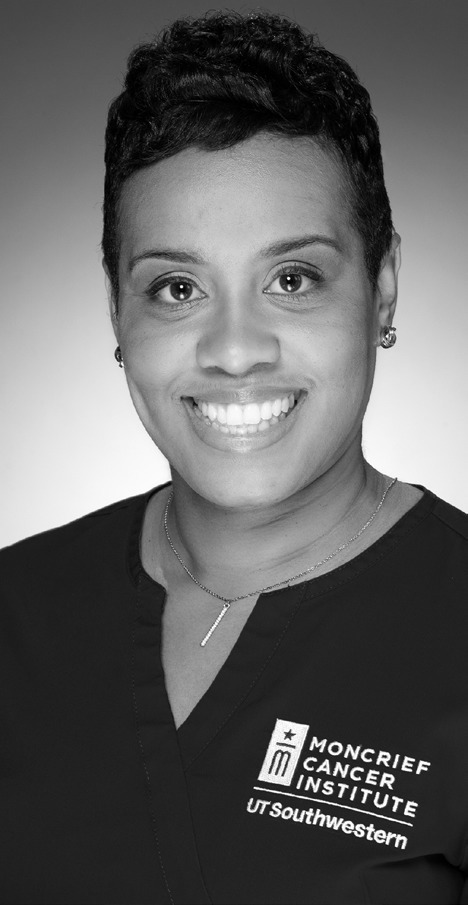
Symptoms of potential colorectal cancer include change in bowel habits or stool shape, stomach cramping or pain, feeling the need to have a bowel movement that doesn’t go away after having one, losing weight without trying, weakness, bleeding from the rectum and blood in your stool, very thin or ribbon-like stools. Stacie Miller, oncology clinic manager for Moncrief Cancer Institute/UT Southwestern, recommends paying attention to changes in the body.
“You know your body, including bowel movements and activity,” she said, and recommends those who are experiencing symptoms to consult with their medical professional.
For those who qualify in Moncrief Cancer Institute’s service area — which spans from Wilbarger and Wichita Counties east to Bowie County, south to McCulloch County, then eastward across San Saba, Lampasas, Burnet, Milam, Robertson, Leon and Houston Counties, then southeast to Trinity, Polk, Tyler, Jasper and Newton Counties in Texas — colorectal cancer screening services are provided at no cost, thanks to a grant from the Cancer Prevention and Research Institute of Texas.
The grant is awarded to Moncrief Cancer Institute, an affiliate of UT Southwestern Simmons Comprehensive Cancer Institute for three years, at which time the an application to continue the grant for another cycle can be made. MCI has been offering this program with CPRIT since 2012. MCI works with experts in the field, trusted professionals in the service communities to offer services.
The free FIT colorectal screenings through MCI are available to underinsured Texas men and women ages 45-75 who have no personal history of colon polyps, colorectal cancer or colon surgery, and who have not completed a stoolbased test in the last year or a colonoscopy in the last 10 years or a sigmoidoscopy exam in the last five years.
According to Miller, those who meet the criteria can “self-refer” for a FIT screening kit online at www.moncrief.com, by selecting prevention and screening, screening, then colorectal cancer screening and click the “Request a Free Colorectal Cancer Screening Kit”; or simply call 1-888-223-8620 for assistance in requesting the screening.
Once approved, the kit will be mailed to the person’s home, with instructions. The completed kit is to be returned in a pre-paid envelop.
If the test comes back normal, another free athome screening kit will be sent annually to the address provided; changes of address may be made by calling 888-223-8620 or have a primary care provider or partner doctor update the information.
If results are abnormal, MCI staff will contact the individual to schedule a follow-up exam at a provider near them, such as Texas Modern Gastroenterology in Sulphur Springs. Funding is available for uninsured and underinsured individuals.